

Regeneration Inverters for Cranes: Saving 20–35% Electricity & Optimizing the Entire Electrical System
Apr
In industrial crane systems, every load lowering cycle is more than just an operation—it is a moment of “burning money.” Currently, most of the energy generated during the braking process is dissipated through braking resistors as heat, leading to wasted electricity, increased heat in electrical cabinets, and rising operating costs. According to actual measured data, this energy can account for 20–35% of the system’s total power consumption.
Regeneration Inverter: Definition & Operating Principle
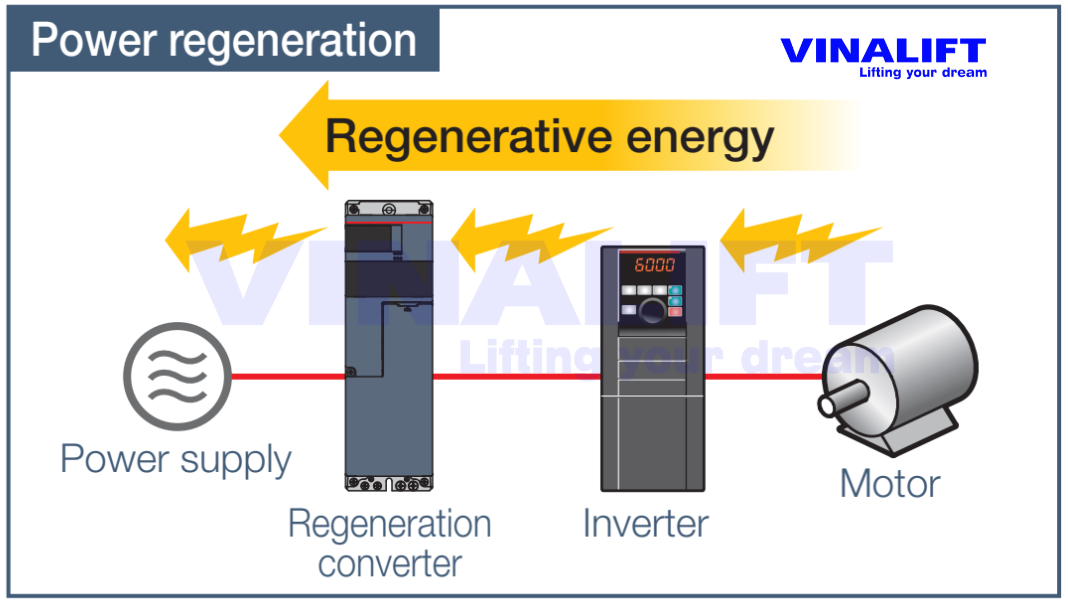
A Regeneration Inverter (Regeneration Converter) is a device that allows the recovery of excess energy from the motor and feeds it back into the power system. In actual crane operation:
-
Lifting load → Consumes electricity
-
Lowering load → Generates electricity (but usually wasted/burnt off)
👉 Regeneration inverters help
-
Control excess energy
-
Eliminate the need for braking resistors
-
Reduce the load on the electrical system
Comparison: Regeneration Inverters vs. Traditional Braking Units
Choosing between regeneration technology and the braking resistor (Brake unit) method shows a clear difference in economic efficiency:
| Feature | Traditional Braking Unit (Brake Unit + Resistor) | Regeneration Inverter (Regeneration Converter) |
| Energy Efficiency | Burns excess energy into heat (Wasted). | Recovers 20-35% of energy for reuse or return to the grid. |
| Space | Takes up significant space due to bulky resistors. | Compact design, completely eliminates the need for resistors. |
| Operating Costs | High (due to wasted power and cabinet cooling costs). | Low (direct reduction in electricity bills). |
| Investment Cost (Electrical) | High (large equipment) | Optimized (can reduce equipment capacity) |
| Harmonics | Uncontrolled | THDi ≤ 5% |
| System | Independent | Integrated multiple mechanisms |
3 Levels of Energy Optimization in Crane Systems
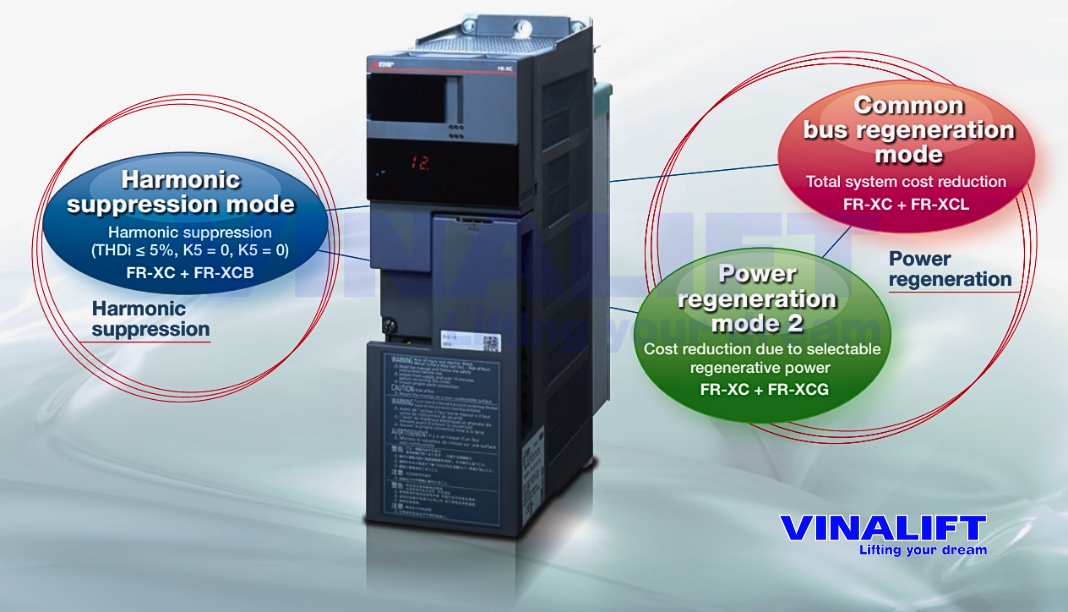
Internal Reuse (Common DC Bus)
Energy generated from the hoist during lowering is supplied directly to other mechanisms like the trolley or bridge.
→ Immediate load reduction for the main power source.
Power Regeneration to the Grid
Excess energy is fed back into the grid.
→ Reduces actual electricity consumption.
Power Quality Control (Harmonic Suppression)
Reduces current harmonic distortion to THDi ≤ 5%.
→ Meets international standards and protects the electrical system.
These three mechanisms help the crane system not only save electricity but also operate as a closed energy ecosystem.
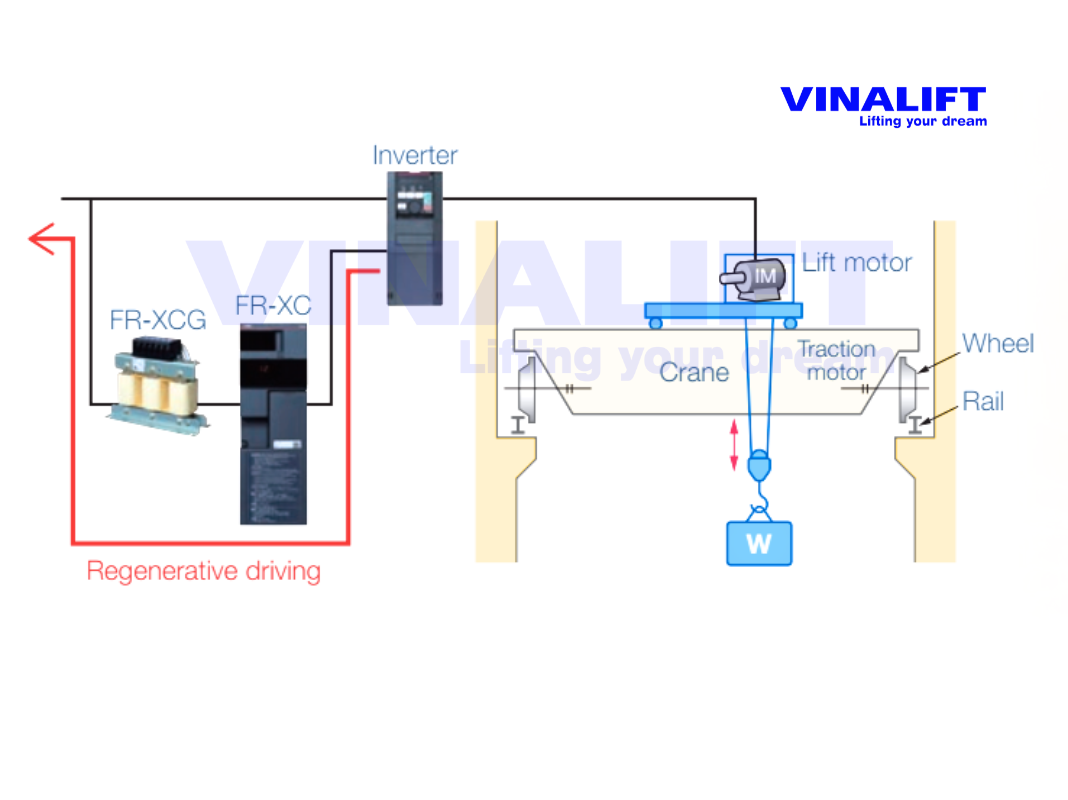
Practical Application in Crane Operation
In crane systems, especially heavy-duty lines, the process of lowering loads or braking movements generates enormous excess energy. Instead of letting this energy dissipate wastefully and heat up the system through braking resistors, VINALIFT applies the FR-XC regeneration inverter solution for comprehensive optimization:
Smart Energy Recovery & Reuse Mechanism
-
Instant Power Reuse: During lowering, the hoist motor acts as a generator. This energy is fed into a common DC bus to immediately power the trolley or bridge travel motors. The system prioritizes using “self-generated power,” reducing dependence on the grid.
-
Power Regeneration: With the high-end FR-XC series, any unused excess energy is processed and pushed back into the factory grid instead of being burnt off. This is the solution to the problem most large-scale inverters face.
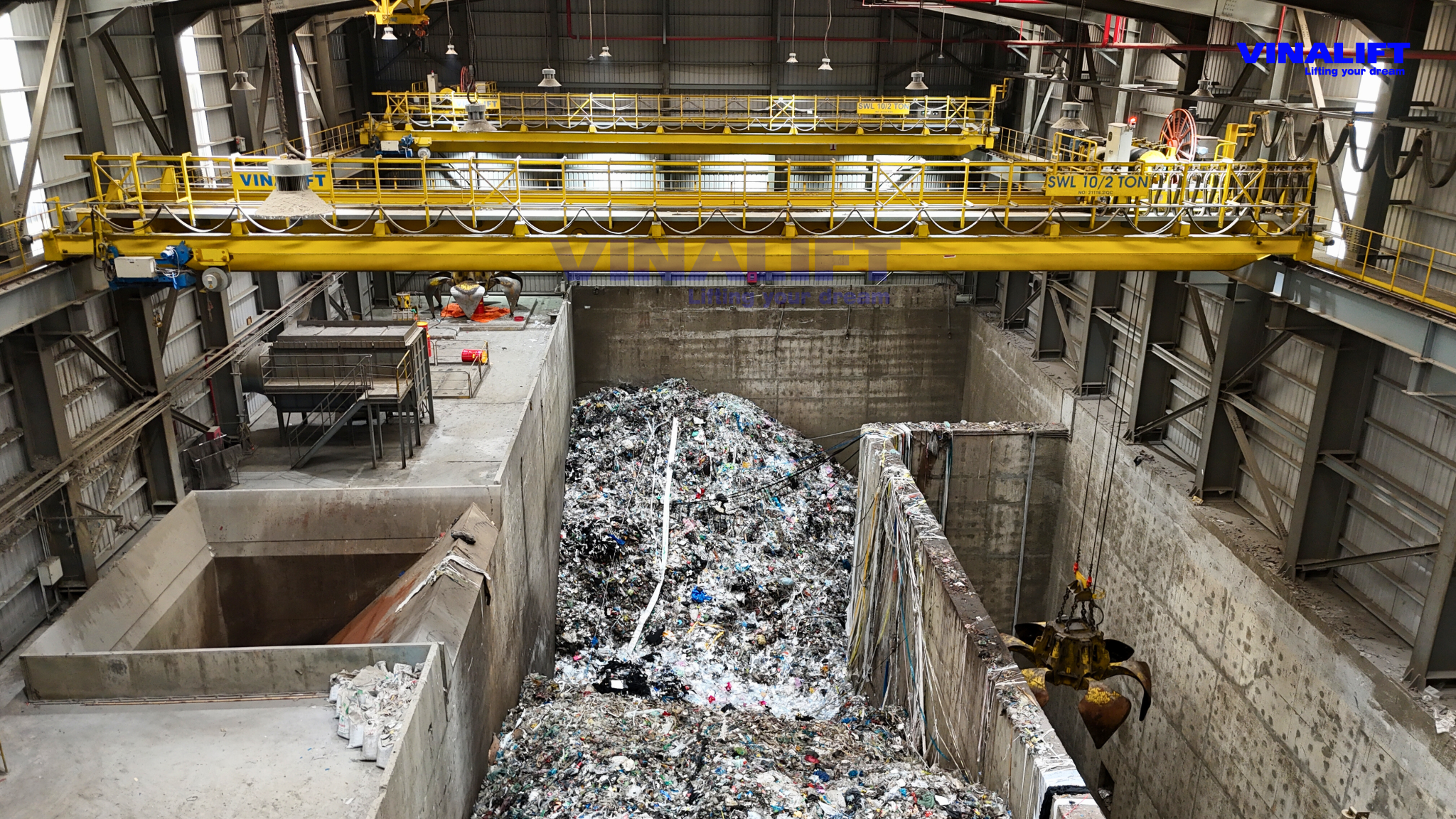
Optimization of the Entire Electrical and Mechanical System
-
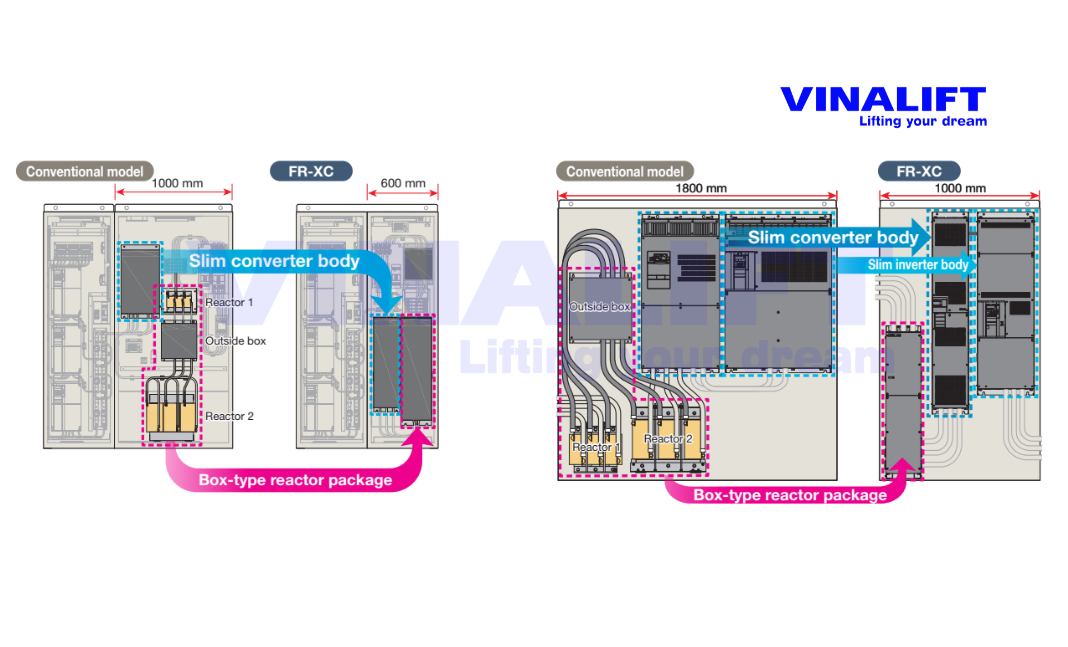
Eliminates braking resistors → reduces heat load in electrical cabinets.
-
Reduces the capacity of input electrical equipment (MCCB, transformer).
-
Reduces electrical cabinet size by up to 40%.
-
Optimizes the crane’s structural weight load.
Digitalized Management and Energy Reporting
-
CC-Link Connection: The system allows connection to the CC-Link industrial network, facilitating continuous transmission of operational data.
-
Energy Saving Map: VINALIFT provides customers with visual reports in the form of data maps, showing detailed metrics on “How much power was saved” and actual “Braking time.” This is a vital basis for businesses to evaluate Return on Investment (ROI).
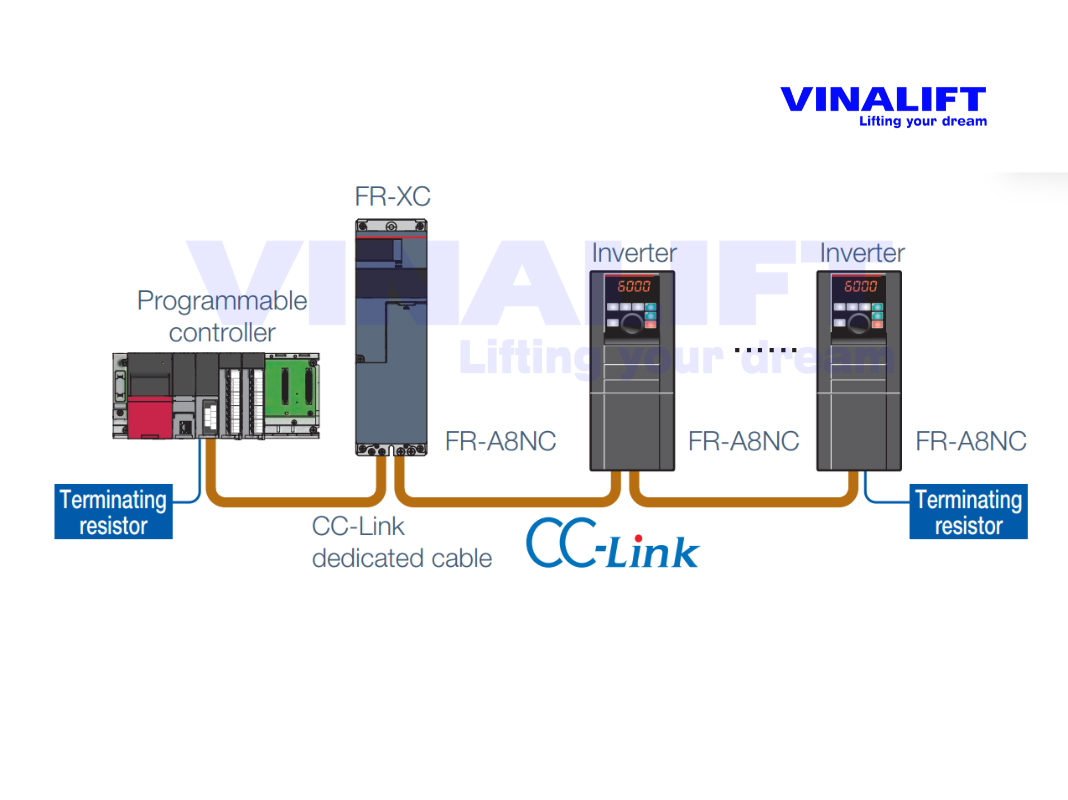
Reducing Equipment Lifecycle Costs
Optimizing Capital Expenditure (CAPEX)
-
Although regeneration inverters have a higher equipment cost than traditional solutions, the complete removal of braking resistors, reduced cooling requirements, and optimized input equipment capacity keep total investment costs balanced or only slightly increased.
-
In return, the system provides significant electricity savings throughout its operating life.
-
Easy Maintenance: Fewer heat-generating components mean a longer equipment lifespan, minimizing future repair and replacement costs.
In reality, electricity costs account for the majority of a crane’s total lifecycle cost; therefore, investing in regeneration solutions optimizes long-term costs rather than focusing only on the initial price.
When should you use a regeneration inverter?
-
Medium – heavy loads (>10 tons)
-
High lifting frequency
-
Systems with multiple mechanisms
-
Factories requiring ESG / energy saving standards
- Especially effective in systems with continuous lowering cycles (steel mills, water plants, port cranes…)
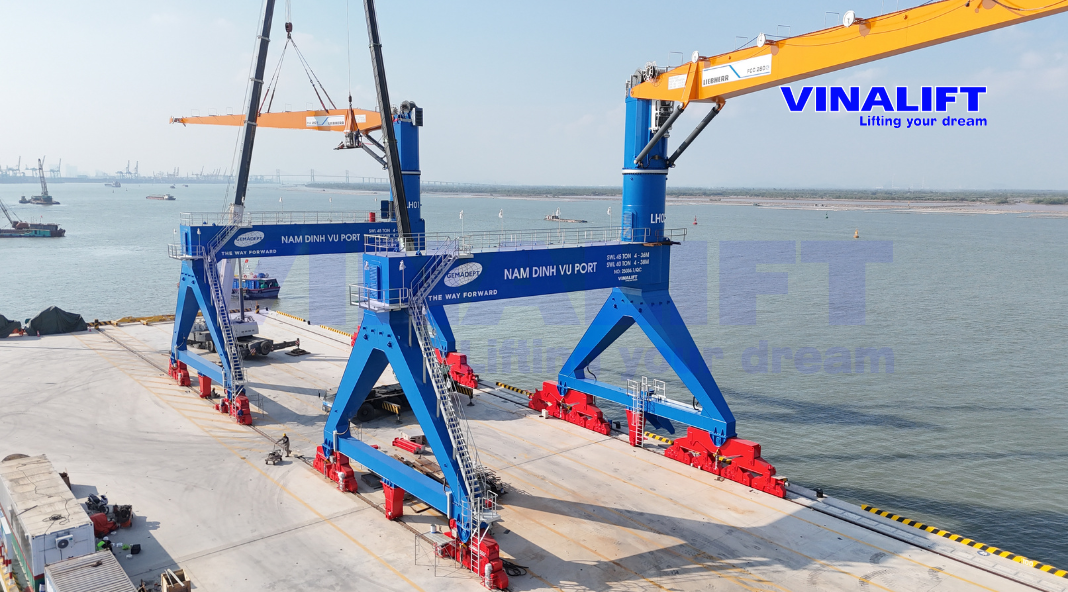
When is it not necessary?:
-
Light loads
-
Low frequency
Actual Project Data
Operational Cost Savings (OPEX)
In high-intensity operating conditions (8 hours/day, 26 days/month), the lifting/moving process may consume 70kW. However, when lowering, the regeneration system immediately recovers 30kW. Instead of paying for 70kW, the owner only pays for the 40kW actually used.
-
Energy Saved: 30 kW x 8 hours x 26 days = 6,240 kWh/month/crane.
-
Cost Saved: Based on average industrial electricity rates, savings reach nearly 12,500,000 VND/month per unit.
-
Project-wide Efficiency: In a project with 11 cranes (equivalent to large water plants or pumping stations), the energy savings for the owner can exceed 1.6 billion VND/year.
“Green Factory” Standard: An Absolute Advantage in Bidding
-
Grid Reduction: Maximum utilization of self-generated power, optimizing consumption efficiency.
-
CO2 Emission Reduction: Demonstrates a commitment to environmental protection and sustainable development.
-
ESG Scoring: Meets strict Environmental – Social – Governance (ESG) standards, creating a major technical advantage in bid profiles.
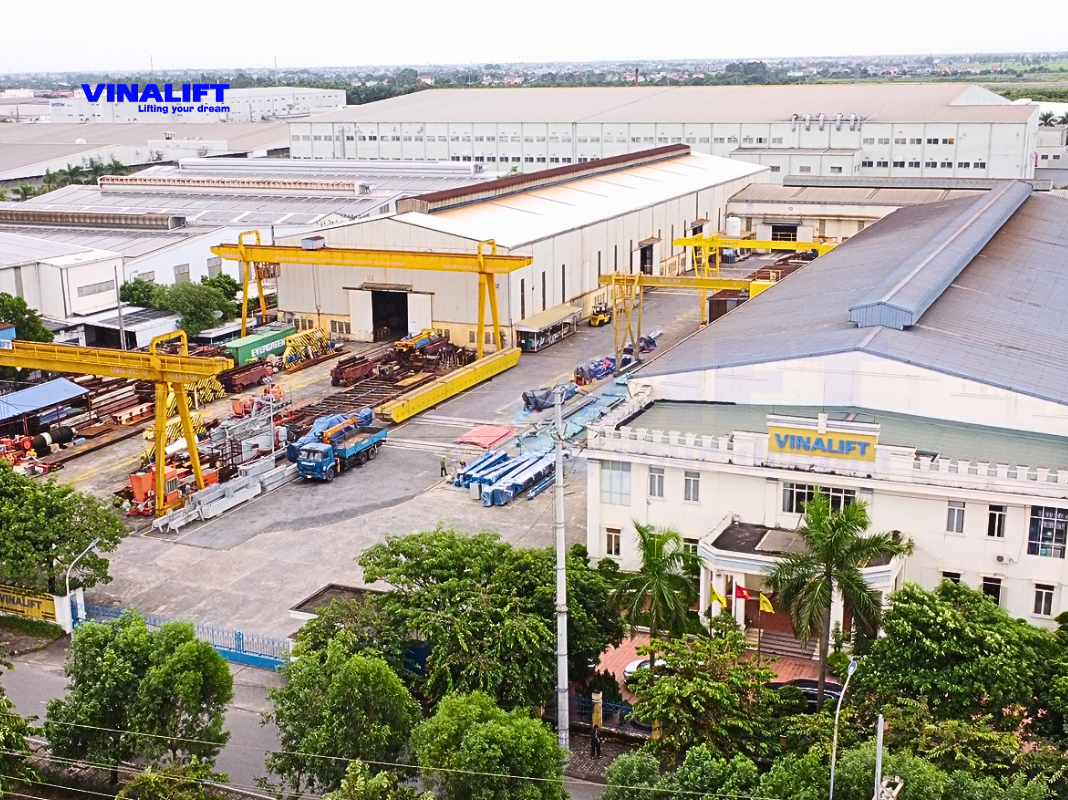
VINALIFT – Leading Green Standards with Comprehensive Manufacturing Capability
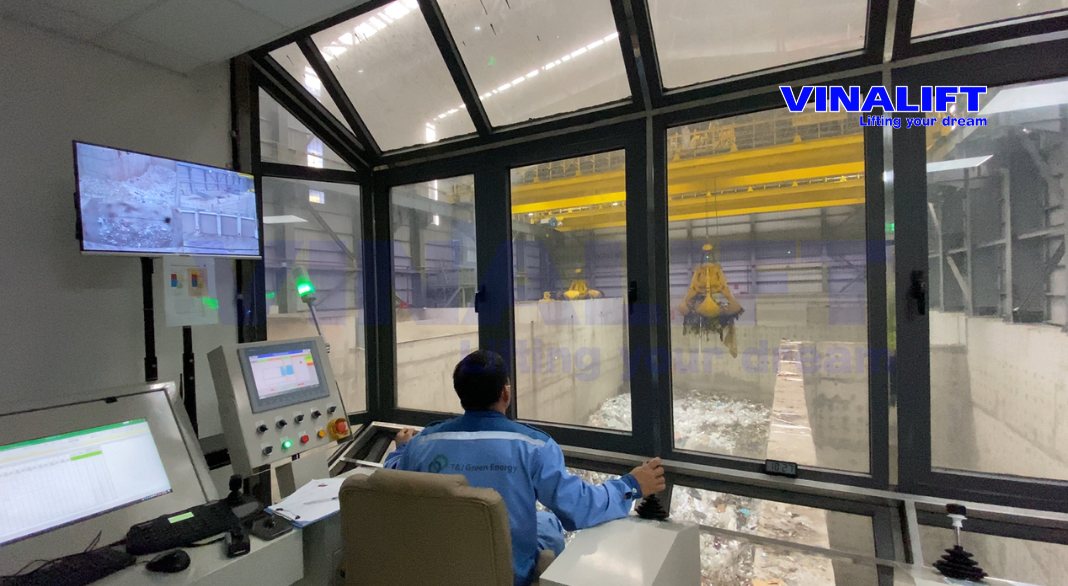
VINALIFT does not just provide equipment; we design the entire energy system for your crane:
-
Optimizing energy flow between mechanisms.
-
Integrating regeneration inverters according to each operating mode.
-
Ensuring power quality according to international standards.
-
Providing operational data and energy efficiency analysis.
“Tailor-made” Capability & International Standards: Independent manufacturing at a large-scale factory complex, strictly complying with world-leading safety standards (FEM, DIN, JIS, ISO 9001, TCVN 4244). Flexible customization of crane structures to meet specific project requirements.
Quality Assurance: Synchronous and durable operation thanks to strategic partners: Hai Anh, Flended, Mitsubishi Electric, Siemens…
Unlike simply installing individual devices, VINALIFT approaches energy optimization from a total system perspective, ensuring real-world efficiency rather than just equipment specifications.
Contact VINALIFT to receive an energy-saving analysis report & payback period for your system.
CONTACT INFORMATION:
📞 Hotline: 039.341.6686
📧 Email: contact@vinalift.vn / minhhieu@vinalift.vn
Thank you for following. If you found this useful, please share and follow our upcoming activities on FACEBOOK or LINKEDIN and YOUTUBE, TIKTOK.
