


What is a Steel Mill Crane? Structure and Functions of the Scrap Charging Crane
Mar
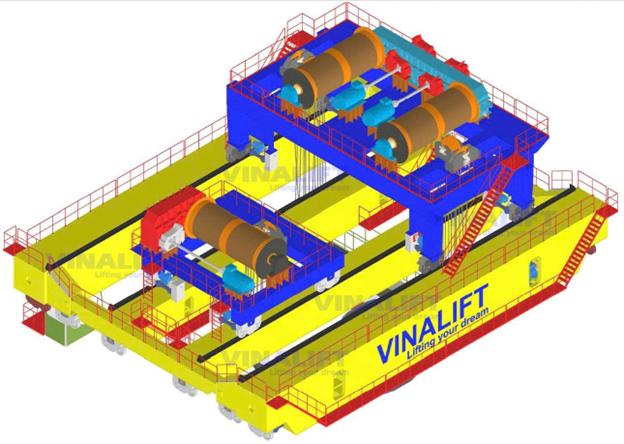
In heavy industrial environments such as metallurgical and steel plants, lifting equipment is not merely for moving goods—it is the “lifeline” ensuring production flow and occupational safety. These devices are generally referred to as “Steel Mill Cranes.” In this article, VINALIFT explores the details of steel mill cranes, specifically focusing on the structure and function of one of the most critical components: the Scrap Charging Crane.
What is a Steel Mill Crane?
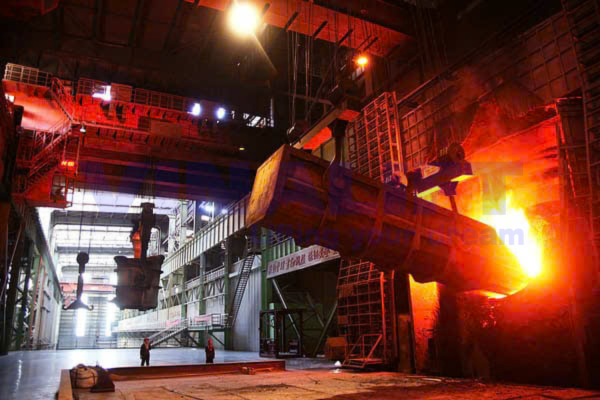
A Steel Mill Crane (also known as a Metallurgical Crane) is a general term for overhead and gantry cranes specifically designed for use in production, smelting, and steel rolling plants. Unlike standard lifting equipment, steel mill cranes must operate under extremely harsh conditions:
-
High Radiant Heat: Frequent exposure to furnaces and molten metal.
-
Dust and Toxic Gases: Environments filled with metal dust, iron filings, and chemical fumes.
-
Continuous Duty Cycles: Operating 24/7 with heavy loads; duty classes typically require A6 to A8 (according to FEM 1.001 standards).
Common types include: Scrap Charging Cranes, Ladle Cranes, Casting Cranes, Billet Handling Cranes, etc.
- SEE MORE: OVERHEAD CRANE – KYOEI STEEL MILL
- SEE MORE: LADLE CRANE 75/20 TONS – HOA PHAT STEEL MILL
What is a Scrap Charging Crane?
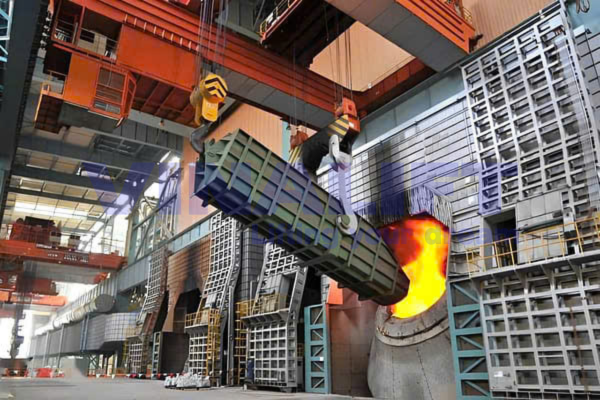
A Scrap Charging Crane is specialized equipment used to transport scrap metal, ore, or other raw materials and feed them into the smelting furnace (Basic Oxygen Furnace – BOF or Electric Arc Furnace – EAF).
-
What is an Electric Arc Furnace (EAF)?
In the metallurgical chain, this device plays a vital role at the beginning of the process. Its stability directly affects the melting cycle and the overall output of the entire plant.
Detailed Structure of a Scrap Charging Crane
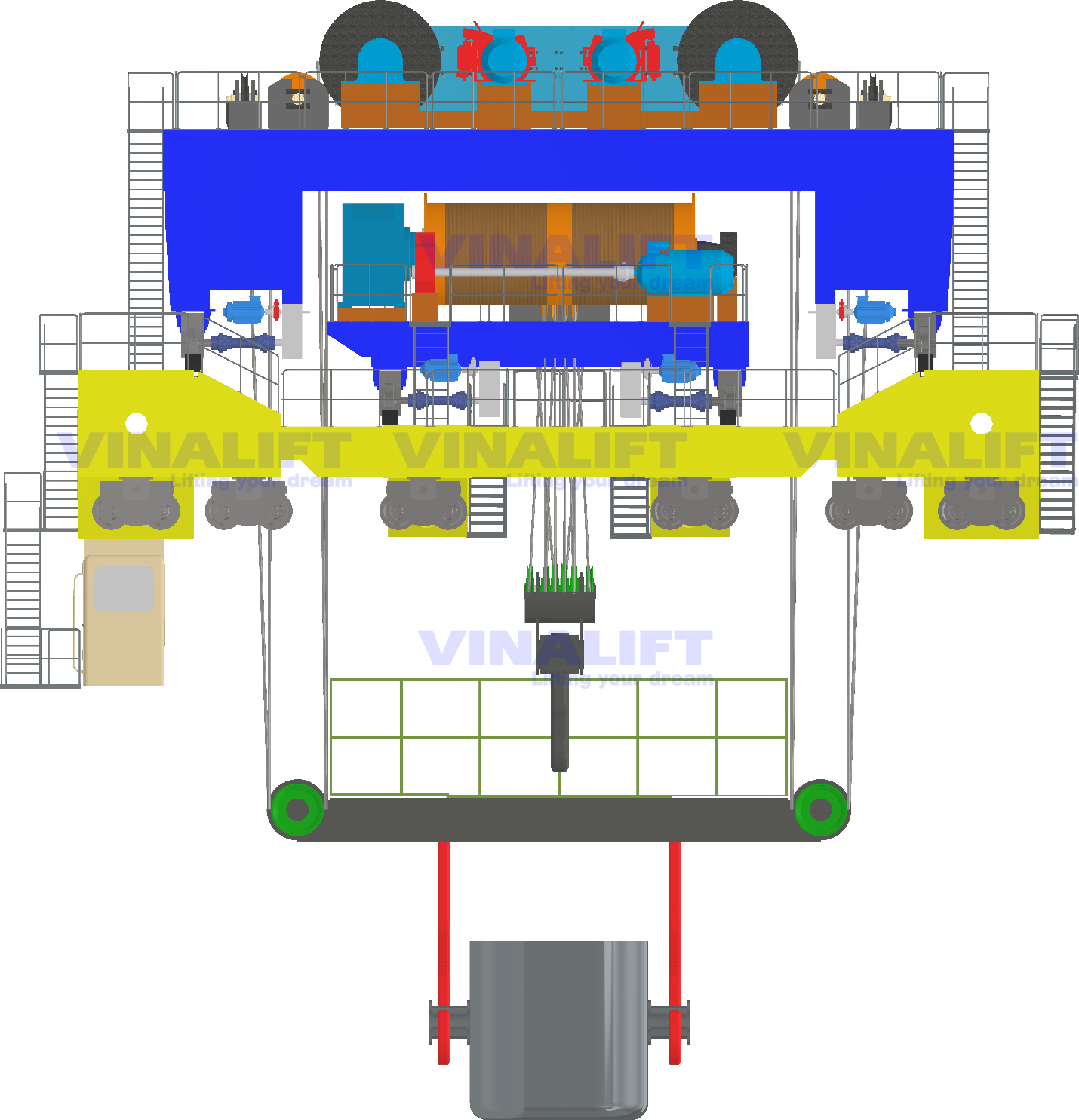
Due to the requirement for absolute safety and ultra-heavy load capacity, the construction of a Scrap Charging Crane is far more complex and massive than a standard overhead crane. A basic system includes:
Main Bridge/Girders:
-
Usually a double-girder or four-girder design (for extreme loads) with a robust welded steel structure. Specialized steel is used to resist thermal deformation.
Trolley:
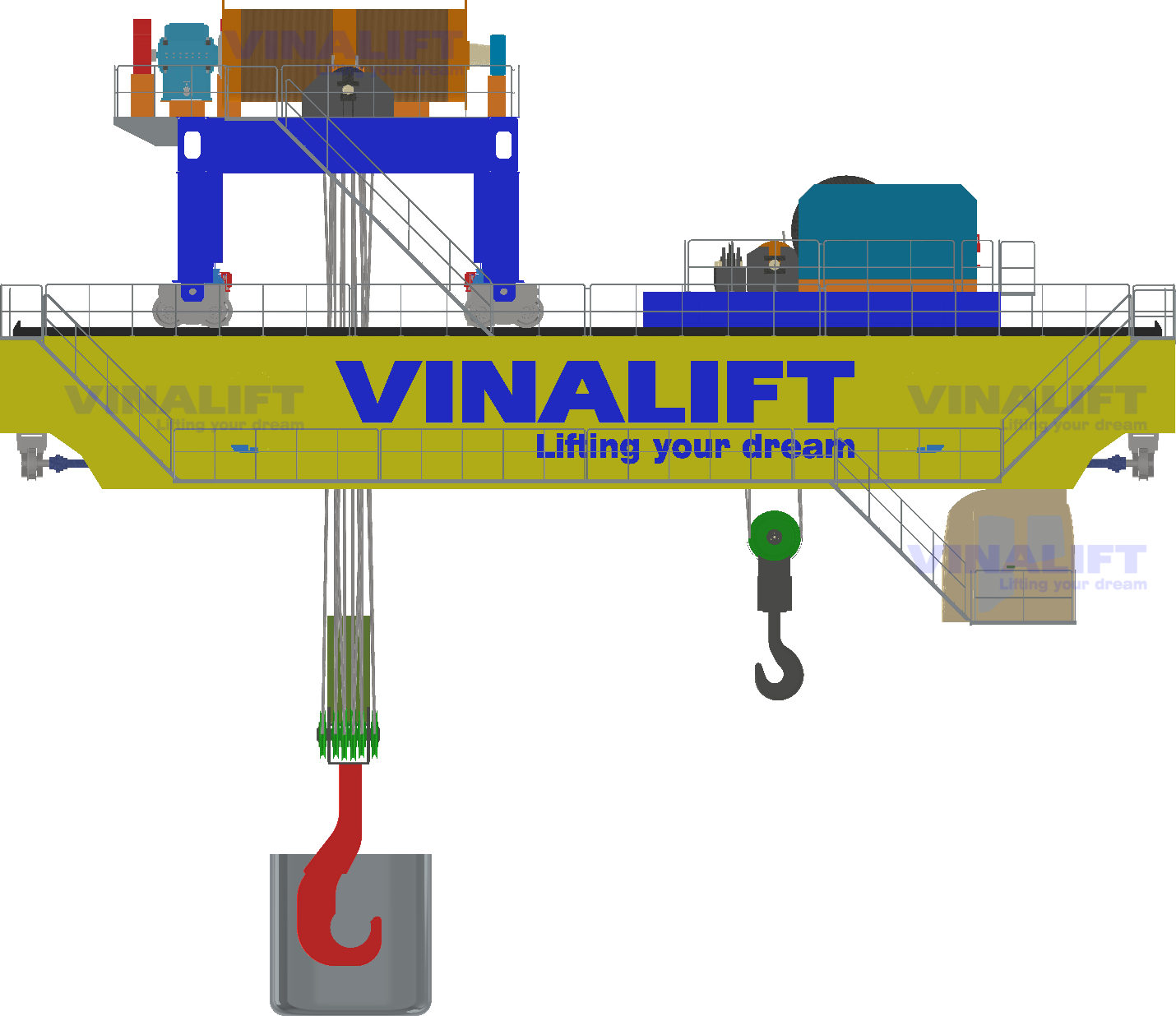
Often equipped with a dual lifting system:
-
-
Main Hoist: Used to lift the entire scrap bucket.
-
Auxiliary Hoist: Used to hook into the bottom of the scrap bucket, working with the main hook to tilt and pour the scrap into the furnace.
-
Specialized Hook System:
-
Hooks are specially designed (often laminated plate hooks or spreader beams) to be compatible with the trunnions of the scrap bucket.
Electrical and Control Systems:
-
All cables and electrical panels must use high-heat resistant materials (Silicon, fiberglass). Inverters and electrical components are housed in electrical rooms with specialized cooling systems.
Control Cabin:
-
Designed with thick thermal insulation, heat-resistant radiant glass, and industrial air conditioning to ensure the safety and health of the operator.
Main Operating Functions
The operation of a Scrap Charging Crane follows these steps:
Transport:
The crane moves to the storage area, hooks, and lifts the scrap bucket (previously filled by magnet cranes or excavators).
Approaching the Furnace:
Moves along the workshop to the position of the EAF or BOF.
Charging:
Utilizing the rhythmic coordination between the main and auxiliary hoists. The main hook holds the bucket trunnions fixed while the auxiliary hook pulls the tail of the bucket upward to tilt it, accurately pouring scrap into the furnace.
Recovery:
Returns the bucket to a vertical position and moves it back to the collection yard to start a new cycle.
VINALIFT & The “Net Zero” Green Value Chain
As metallurgical plants face pressure to cut carbon emissions, VINALIFT does more than build durable cranes; we turn them into high-tech solutions contributing to the industry’s Net Zero goals:
-
Superior Energy Savings: Equipped with advanced Inverter drive systems and high-efficiency motors (IE3/IE4). Specifically, Regenerative Braking systems recover electricity during the lowering of hundred-ton loads, converting mechanical energy back into electricity for the plant grid.
-
Optimized Productivity: PLC automation combined with precision positioning sensors minimizes human error and optimizes duty cycles. Shortening charging time helps maintain furnace heat, saving fuel and increasing output.
-
Smart Design: Using modern structural analysis software, VINALIFT optimizes the dead weight of the crane without reducing rigidity, reducing the load on the factory structure and the energy required for movement.
VINALIFT – International Quality Standards System
VINALIFT is proud to be a leading company in Vietnam, committed to ensuring that 100% of equipment leaving our factory strictly complies with the following regulations and technical standards:
Design & Manufacturing: TCVN 4244:2005, QCVN 07:2012, FEM 1.001, CMAA, EN 13001-1, EN 13001-2.
Structure & Welding: AWS D1.1 (ASME), ISO 8501, SSPC.
Management Systems: ISO 9001:2015, ISO 14001:2015, ISO 45001:2018.
With a team of highly experienced engineers and a rigorous quality control process, we are ready to meet the specific requirements of both domestic and international projects.
Conclusion
A Scrap Charging Crane is a specialized piece of equipment that demands the highest levels of precision, durability, and safety. Choosing a capable manufacturer like VINALIFT helps metallurgical plants optimize productivity while minimizing the risk of operational downtime.
For customers and EPC contractors seeking consultation on the design and manufacturing of lifting equipment for steel plants, please contact VINALIFT directly to receive professional support from our experts.
Are you ready to elevate your project with VINALIFT’s lifting equipment solutions?
Contact our Project Department today to receive our detailed company profile and discuss your specific technical requirements.
CONTACT INFORMATION
Vietnam Steel Structures and Lifting Equipment Joint Stock Company (VINALIFT)
Phone: 0393 416 686
Email: contact@vinalift.vn
Factory Address: Lot A1, Phuc Dien Industrial Park, Mao Dien Commune, Hai Phong City, Vietnam
